Mentorship in Peer Review: Closing the Gap Between Experienced Reviewers and Emerging Scholars

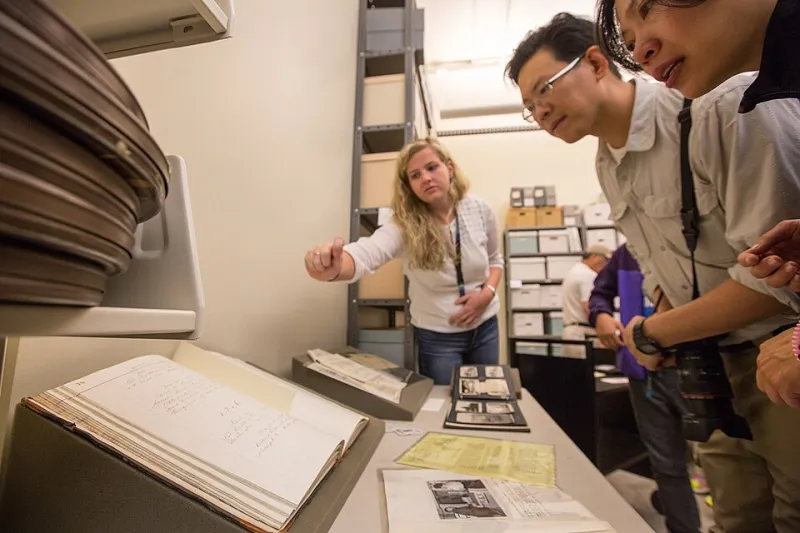
Photo: professional academic mentorship researchers university meeting, via www.forwardpathway.us
Ask most early-career researchers how they learned to conduct peer review, and the answer tends to follow a familiar pattern: they watched how others handled their own manuscripts, mimicked feedback they had received, and largely figured it out on their own. Formal instruction is the exception rather than the rule. This improvised apprenticeship model has persisted for decades across American research institutions, and its consequences are now measurable—in inconsistent review quality, ethical blind spots, and a growing sense among junior scholars that they are navigating one of academia's most consequential responsibilities without adequate preparation.
The mentor gap in peer review is not a matter of individual negligence. It is a structural failure, and understanding it requires looking honestly at the incentives—and disincentives—that shape how mid-career researchers allocate their time.
Why Experienced Reviewers Disengage from Teaching the Craft
Mid-career faculty occupy a particularly demanding professional position. They carry the bulk of departmental service obligations, manage growing research programs, supervise graduate students, and compete for funding in an environment that rewards output above almost everything else. Against this backdrop, the idea of carving out time to mentor a junior colleague on the nuances of constructive critique can feel like a luxury the calendar simply will not accommodate.
But time pressure alone does not fully explain the mentor gap. Institutional incentive structures play an equally significant role. Tenure and promotion committees in most U.S. universities do not formally recognize peer review mentorship as a creditable activity. A faculty member who spends twenty hours per year guiding early-stage colleagues through the review process earns no additional credit on an annual review form. The invisible labor of mentorship remains invisible to the systems that determine professional advancement.
There is also the matter of siloed expertise. Peer review is discipline-specific in ways that complicate cross-departmental mentorship. A senior biomedical researcher may be an exemplary reviewer within their own subfield but feel unqualified—or simply uninterested—in advising a historian or social scientist on methodological standards relevant to their work. The result is a fragmented landscape in which mentorship, when it does occur, happens organically within narrow specializations and rarely scales.
The Cost of an Unguided Reviewer Pipeline
The downstream effects of inadequate mentorship are not abstract. Research published in scholarly communication literature consistently identifies inconsistency and bias in peer review as significant threats to the integrity of the published record. When reviewers have not been trained to recognize their own methodological assumptions, to separate substantive critique from stylistic preference, or to apply ethical standards consistently across authors of varying institutional prestige, the review process itself becomes a source of noise rather than a filter for it.
For early-career researchers serving as reviewers—a role many assume within the first two years of their doctoral work—the stakes are particularly high. Without mentorship, they are prone to overcorrecting toward harshness in an effort to appear rigorous, or toward excessive leniency out of imposter syndrome. Neither tendency serves the scholarly record. Both reflect a system that has normalized unpreparedness.
Beyond individual reviews, the absence of mentorship contributes to reviewer attrition. Junior scholars who feel unsupported and overwhelmed by the responsibility of peer review are more likely to decline future invitations or to treat the task as a bureaucratic obligation rather than a professional contribution. The field loses not just quality but participation.
Frameworks for Formal Peer Review Mentorship
Addressing the mentor gap requires deliberate institutional design, not goodwill alone. Several frameworks have demonstrated promise in pilot programs across U.S. research universities and professional societies.
Structured co-review programs represent perhaps the most direct intervention. Under this model, an experienced reviewer formally invites a junior colleague to participate in a review assignment, sharing drafts, discussing evaluation criteria, and providing feedback on the mentee's written critique before submission. Some journals have begun facilitating this arrangement explicitly, offering co-review pathways that acknowledge both contributors. PRR Society encourages its member institutions to explore formal co-review agreements as a low-infrastructure entry point.
Peer review workshops integrated into graduate training offer another lever. Rather than treating peer review as an implicit skill that doctoral students will absorb through exposure, programs can build dedicated sessions into research methods curricula. These workshops can address the ethics of confidentiality, strategies for structuring constructive feedback, and the standards of rigor appropriate to different research methodologies. Several institutions affiliated with PRR Society have piloted half-day workshop formats with measurable improvements in self-reported reviewer confidence among participants.
Mentorship recognition in annual review processes requires advocacy at the institutional level, but it is achievable. Department chairs and deans who understand the downstream value of well-trained reviewers can create space for mentorship to count—explicitly—within service categories on faculty evaluation forms. Professional societies, including PRR Society, can support this effort by publishing guidance documents that help institutions articulate the value of peer review mentorship in promotion and tenure language.
Building a Culture of Investment
Ultimately, closing the mentor gap requires a cultural shift alongside structural reform. Experienced reviewers must come to see the transmission of their expertise as a professional obligation proportionate to their standing in the field—not as optional generosity, but as a meaningful contribution to the integrity of the disciplines they represent.
This reframing is not merely aspirational. It reflects the core premise on which peer review rests: that credentialed experts bear responsibility for the standards of their field. Extending that responsibility to the preparation of the next generation of reviewers is a natural and necessary corollary.
PRR Society is committed to supporting member organizations in developing mentorship infrastructure that is practical, scalable, and formally recognized. The craft of rigorous peer review is too important to leave to chance. The time to build the pipeline is now.