Rigor Under Pressure: How Peer Reviewers Can Sustain Quality Amid an Avalanche of Submissions
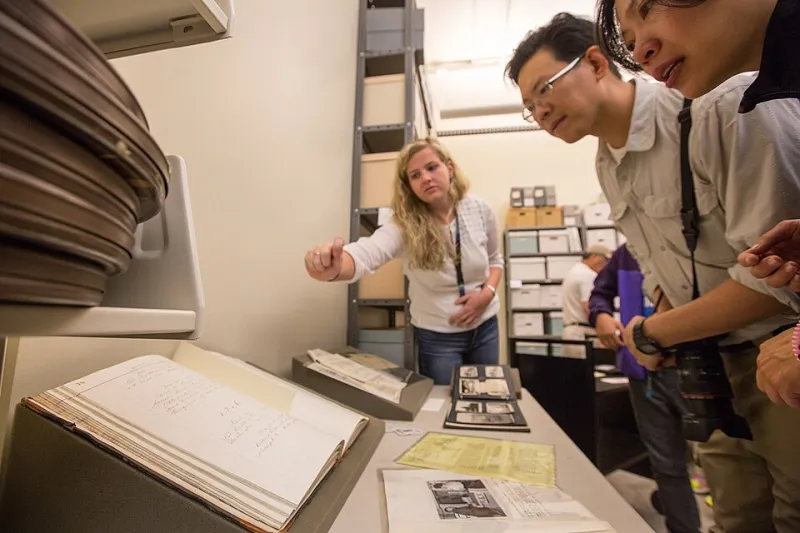
Photo: Yellowstone National Park, Public domain, via Wikimedia Commons
The numbers are striking. Estimates from major publishing consortia suggest that global scholarly output has roughly doubled over the past two decades, with some fields—biomedical research, computer science, and climate science among them—experiencing even steeper growth. For the researchers who volunteer their time as peer reviewers, that surge translates into inboxes perpetually stacked with review requests, compressed timelines, and a creeping sense that thoroughness is becoming a luxury rather than a standard.
This is not merely an inconvenience. When reviewers are stretched too thin, the consequences ripple outward: superficial evaluations reach editorial boards, methodological errors slip through, and authors receive feedback that fails to strengthen their work. The peer review system, which remains the cornerstone of scholarly credibility in the United States and internationally, is only as strong as the attention each reviewer brings to each manuscript. Protecting that attention is therefore not a personal preference—it is a professional and ethical imperative.
Understanding the Scope of Reviewer Fatigue
Reviewer fatigue is a documented phenomenon, not an exaggeration. A 2023 survey conducted by a coalition of academic publishers found that more than 60 percent of active reviewers in the US reported declining at least one invitation per month due to workload concerns, while a significant portion admitted to accepting requests they felt underqualified or under-resourced to fulfill. These decisions, individually rational, collectively degrade the quality of the review pool.
The root causes are structural as much as personal. Tenure and promotion systems at American universities have historically rewarded publication output far more generously than service contributions like peer review. A junior faculty member who spends twenty hours on a meticulous review receives little formal credit compared to a colleague who invests that same time in producing a citable paper. Until institutions recalibrate their incentive structures, the burden will continue to fall disproportionately on those whose professional generosity exceeds their strategic self-interest.
Practical Frameworks for Time-Conscious Reviewing
Acknowledging the problem is a necessary first step; developing workable responses is the harder task. Several frameworks have gained traction among experienced reviewers and editorial consultants.
Staged reading protocols offer one practical approach. Rather than attempting to absorb an entire manuscript in a single sitting, reviewers can divide their engagement into discrete phases: an initial rapid scan to assess scope and fit, a focused analytical read of methods and data, and a final synthesis pass for conclusions and implications. This structure prevents the cognitive fatigue that accompanies marathon reading sessions and allows reviewers to surface the most critical issues before becoming mired in peripheral details.
Selective depth allocation is a related strategy. Not every section of every manuscript warrants equal scrutiny. A reviewer with deep expertise in quantitative methods, for instance, may reasonably invest more time examining statistical design than parsing introductory literature reviews. Calibrating attention to one's genuine areas of competence both improves feedback quality and reduces the exhaustion that comes from attempting comprehensive mastery of unfamiliar territory.
Scheduled review windows, rather than ad hoc engagement, help reviewers integrate their commitments into broader professional rhythms. Many experienced reviewers designate specific blocks—a Friday morning each week, for example—exclusively for review work. This approach prevents the disruptive context-switching that occurs when reviews are attempted piecemeal between other obligations.
The Role of Journals and Professional Societies
Individual strategies, however well designed, cannot compensate for systemic deficiencies. Journals and professional societies bear significant responsibility for creating conditions in which quality reviewing is feasible.
Editor responsiveness is one critical variable. When journals communicate clearly about scope, provide structured review templates, and offer realistic deadlines—rather than perpetually requesting two-week turnarounds for complex manuscripts—they signal that reviewer effort is valued. Conversely, journals that flood potential reviewers with automated invitations and then replace declining reviewers within hours contribute to a transactional culture that discourages investment in quality.
Professional societies, including PRR Society, are positioned to advocate for reviewer recognition at multiple levels. This includes pushing for peer review contributions to be formally logged and credited in academic dossiers, developing standardized reviewer training curricula, and facilitating mentorship programs that pair early-career researchers with seasoned reviewers. When reviewing is treated as a skill to be developed rather than an obligation to be discharged, the entire system benefits.
Some journals have also begun experimenting with reviewer compensation models—modest honoraria, journal credit systems, or access to publication fee waivers—as a means of acknowledging the real cost of reviewer time. While these initiatives remain far from universal, they represent a meaningful shift in how the publishing community conceptualizes the labor that sustains it.
Protecting Reviewer Well-Being Without Compromising Standards
Burnout is a genuine occupational hazard for highly active peer reviewers, and its consequences extend beyond individual welfare. A reviewer who has become cynical, exhausted, or resentful is unlikely to produce the kind of engaged, constructive feedback that authors need and journals depend upon. Preventing burnout is therefore not merely a matter of personal self-care—it is a quality-assurance issue.
Setting firm limits on annual review commitments is one protective measure. Many experts suggest that between eight and twelve reviews per year represents a sustainable threshold for most active researchers, though this figure varies considerably by field and career stage. Reviewers who consistently exceed this range without institutional support should feel empowered to decline invitations without apology.
Equally important is the cultivation of a culture in which declining a review request is normalized rather than stigmatized. When a reviewer declines because they lack the time or expertise to do justice to a manuscript, that decision protects both the author and the integrity of the process. Journals and editors should communicate this message explicitly rather than allowing guilt to function as an informal recruitment mechanism.
Looking Forward
The peer review ecosystem in the United States is at a crossroads. The volume of research being produced shows no sign of declining, and the pool of qualified reviewers has not expanded proportionally. Without deliberate intervention at the institutional, editorial, and professional levels, the gap between submission volume and review capacity will widen further.
PRR Society is committed to advancing policy conversations and practical resources that support reviewers at every career stage. The goal is not to make peer review easier in the sense of lowering standards, but to make rigorous reviewing sustainable—so that the researchers who invest their expertise in evaluating others' work can continue to do so with the care and attention that science requires. Rigor and sustainability are not opposing values. Pursued thoughtfully, they are mutually reinforcing ones.