Beyond the Breaking Point: Rebuilding Peer Review Workflows to Protect Reviewers and Preserve Scientific Standards

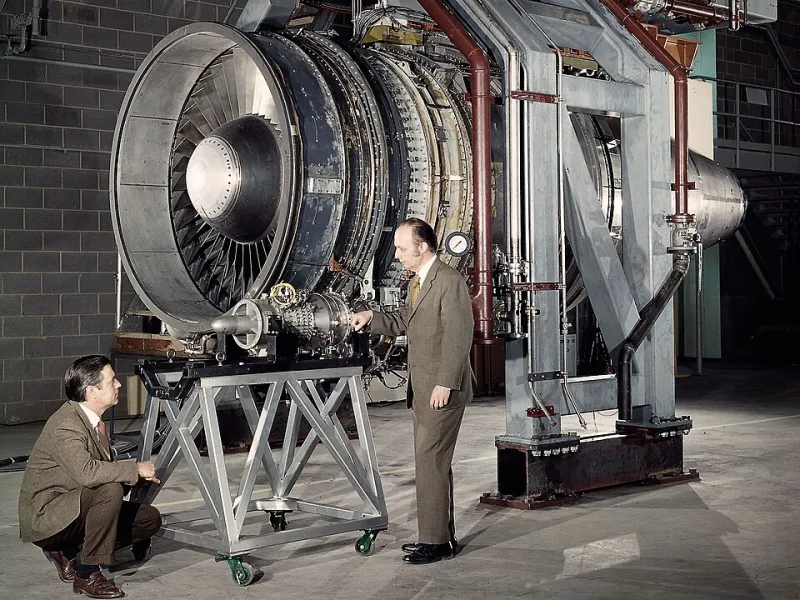
Photo by Photo by Maxim Ilyahov on Unsplash on Unsplash
For decades, the peer review system has functioned on an implicit social contract: researchers submit their work, and qualified colleagues volunteer their expertise to evaluate it. That contract is fraying. Across disciplines, from biomedical research to the social sciences, editors report mounting difficulty recruiting qualified reviewers. Those who do accept invitations increasingly submit reviews late, decline follow-up requests, or withdraw from panels entirely. The cause, in most cases, is not indifference. It is exhaustion.
Understanding why reviewer burnout has reached crisis levels requires examining both the psychological toll of the work and the structural conditions that make it unsustainable. Addressing it demands more than goodwill—it requires deliberate workflow redesign informed by evidence and guided by a genuine commitment to the long-term health of scholarly communication.
The Anatomy of Reviewer Fatigue
Peer review is cognitively demanding work. A thorough evaluation of a single manuscript can require anywhere from three to ten hours, depending on the field and the complexity of the submission. Reviewers are expected to assess methodological soundness, situate findings within existing literature, identify potential ethical concerns, and communicate their conclusions in writing—all without compensation and often under tight deadlines.
The volume of requests has grown substantially. A 2023 analysis published in Learned Publishing estimated that the number of manuscripts submitted to peer-reviewed journals has increased by more than 50 percent over the past decade, driven in part by growing researcher populations, institutional publication mandates, and the expansion of open-access publishing. The reviewer pool, however, has not expanded at a comparable rate. The result is a concentration of burden on a relatively small cohort of active, experienced scholars.
Research in occupational psychology identifies several hallmarks of burnout that map directly onto the reviewer experience: emotional exhaustion, depersonalization, and a diminished sense of personal accomplishment. When reviewers feel that their contributions go unacknowledged, that their feedback is ignored, or that they are simply one node in an impersonal production pipeline, disengagement follows. The quality of reviews declines before participation does—meaning that burnout damages scientific integrity before it becomes visible as a recruitment problem.
Staggered Submission Windows: A Structural Intervention
One of the most straightforward interventions available to journals and editorial boards is the introduction of staggered or batched submission windows. Rather than accepting manuscripts on a rolling basis throughout the year, journals operating under this model designate specific submission periods—typically two to four per year—during which new manuscripts are received and processed.
The benefits are logistical and psychological. Editors can recruit reviewers in advance, distribute assignments more equitably, and communicate clearer timelines to all parties. Reviewers, in turn, can plan their commitments around known periods of activity rather than absorbing unpredictable requests throughout the year.
The American Journal of Political Science has employed a version of this model for several years, and editor surveys have consistently noted improvements in reviewer responsiveness and review quality. While staggered windows are not universally applicable—journals in fast-moving fields such as infectious disease research may find them operationally impractical—they represent a meaningful option for many humanities and social science publications.
Collaborative Review Panels: Distributing the Load
A more structurally ambitious approach involves replacing the traditional two- or three-reviewer model with standing collaborative review panels. Under this arrangement, a small group of reviewers—typically four to six—shares responsibility for evaluating manuscripts within a defined topical area over a set term, often six to twelve months.
Panel members divide individual reviews among themselves based on expertise and availability, consult one another on borderline cases, and collectively develop a more consistent evaluative standard over time. The individual burden per manuscript decreases, while the depth of collective scrutiny may actually increase.
The eLife journal's editorial model, which pairs senior editors with consulting reviewers in a consultative process, reflects a similar philosophy. Early data from journals piloting collaborative panel structures suggest that reviewer satisfaction improves significantly, and that the rate of late or incomplete reviews declines. Crucially, editors report no measurable decline in the rigor of published work—a finding that challenges the assumption that burden reduction necessarily entails a quality trade-off.
Recognition Systems and Institutional Accountability
Sustainable review cycles cannot be achieved through structural changes alone. Institutions and professional societies must also address the fundamental problem of recognition. Peer review contributes enormously to the scientific enterprise, yet it remains largely invisible in promotion and tenure evaluations, grant applications, and annual performance reviews at most US research universities.
Several organizations have begun to push back against this invisibility. The PRR Society's own advocacy work has emphasized the importance of formalizing reviewer contributions as a recognized category of professional service. Platforms such as Publons and ORCID now allow researchers to create verified records of their review activity, providing at least a partial infrastructure for recognition.
More substantive change requires institutional will. Department chairs and deans must be willing to treat documented review contributions as genuine evidence of scholarly engagement. Funding agencies, including the National Institutes of Health and the National Science Foundation, could further reinforce this norm by encouraging applicants to document peer review service in biosketches and project narratives.
Training as a Sustainability Measure
Burnout is exacerbated when reviewers feel underprepared for the task. Early-career researchers who accept review invitations without adequate training may invest disproportionate time in each assignment or experience anxiety about the adequacy of their evaluations. Structured training programs—offered through journals, professional societies, or institutions—can reduce this inefficiency while simultaneously expanding the reviewer pool.
The PRR Society has developed a suite of reviewer development resources designed to help emerging scholars build competence and confidence in evaluation practice. By broadening the base of qualified reviewers, the field reduces its dependence on an overtaxed cohort of senior scholars and creates a more resilient system overall.
A Call for Coordinated Action
No single intervention will resolve the reviewer burnout crisis. What is required is a coordinated effort among journals, institutions, professional societies, and funding bodies—each accepting responsibility for the portion of the problem within their sphere of influence.
Journals must redesign workflows with reviewer capacity in mind, not merely manuscript throughput. Institutions must recognize and reward review service as a legitimate professional contribution. Societies like PRR Society must continue to advocate for systemic reform while providing practical resources to members navigating an increasingly demanding landscape.
The integrity of the scientific record depends on the willingness of qualified experts to engage seriously with the work of their peers. That willingness is not inexhaustible. If the field continues to treat reviewer labor as a renewable resource requiring no stewardship, the consequences for research quality will be significant and lasting. The time to redesign these systems is now—before the breaking point becomes a breaking down.